Showing posts with label book reviews. Show all posts

Sunday, June 21, 2020

Our Story

This review first appeared in Goodreadshttps://www.goodreads.com/review/show/2491467631


Rao Pingru wrote this charming "graphic novel." It contains text and numerous paintings.

My first clear memories are of the ceremony that marked the formal start of my schooling: the Four Treasures of Study, the brand-new brush, ink, paper, and inkstone.  Uncle Huang, whose calligraphy was beautiful, grasped my hand and together we traced the first lesson. 

In 1940, Rao set off to join the First Command Whampoa Academy. I admired Napoleon and chose the artillery but upon graduation (1943) chose the 100th Army stationed in Yongfeng county in Jiangxi. I was determined to go home first and pay my respects at my mother's grave. Then I would go and kill the enemy and die without regret.

He married Mao Meitang in 1948 and writes of walks by a lake or snacking on Nanchang's "ovenside sesame cakes," chatting and sipping tea. Once they quarreled and stopped talking for a few hours. It was the only instance in their marriage that Rao could recall.


After the Revolution of 1949, Rao tried his hand at business. The family settled in Shanghai where he
worked as an accountant at the hospital and as Art and Literature editor at Dade Publications. 

1957 brought a drastic change in the political climate and Rao spent 1958-80 in "Re-education through Labor." Meitang survived with their five children on work in factories.  Rao worked at a factory during reeducation and was allowed to go home for Chinese New Year. When released he had to sign an agreement not to return to the factory or make any future demand on them. He registered at the Shanghai neighborhood and got his old jobs back. 

"When winter is at its coldest, spring cannot be far behind." He hoped that "the two of us should find a quiet spot in the countryside, have a small allotment, and live the simple life.

This world no longer exists. We are grateful for Rao's story.

Friday, August 2, 2019

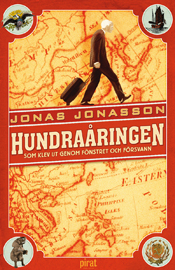
The Hundred-year-old Man


Jonas Jonasson's Hundred-year-old Man who Escaped is a charming story, told with gentle good humor and sly wit. A hundred-year-old man tires of life in a senior home and its restrictions on his consumption of vodka. So he climbs out a window and escapes. His adventures begin with an encounter with a young man from a criminal outfit ("Never Again") and a suitcase (full, it turns out, of money, a lot of money).

What follows is a tall tale, a shaggy-dog tale, with many long flashbacks. Our hero meets Franco, Truman, Madam Chiang Kai Shek, Madam Mao, the Koreans, a gulag, a trek across the Himalayas and Iran ... You get the picture.

Oh, yes, there is also a tough-talking dame and an elephant. Why not?

The characters are all sympathetic and the tone of the story beguiles. Notwithstanding the longueurs of this journey (and its occasional lapses), the book has received wild approval. The author has projects to continue his rapport with his readers. Check out his website and sequels.


The cover, above, and the original edition in Swedish on right.

Monday, May 27, 2019

The Three-body Problem


This is a brilliant book. It tackles hard science in a manner that one associates with Isaac Asimov. And it weaves the story with incidents from the Cultural Revolution.

But I wish it had more emotion in its characters. The main character faces all life with the same repressed self that she faced the murder of her father, enacted in front of her young eyes by fanatical revolutionaries. A similar stolidness sustains her through her decades under suspicion.

When she replies to a radio signal from the Trisolaris world - despite the clear warning NOT to do so, it appears to this reader to be with a similar sullenness, a flatness of spirit that defies reason.

One feels a need to be "fair" to the author. He has already stretched his art to include consideration of the three body problem - the random periods of hot and cold on the Trisolaris world is perhaps the best way to "show" and not tell about the problem. Their climate changes require that the inhabitants prepare themselves for indeterminate storage each time an emergency is announced. I will only say that the author managed to make getting one's body prepared fantastic and believable. He also discusses with aplomb possible states of certain substances in alternative universes with one, two, and many others more than three dimensions.

But the main character goes on to dispose of others who perhaps get too close to her. Her thin-lipped lack of remorse over these pages chilled my veins. It left an aching emptiness as I followed the author through his story. Perhaps we are from Mars and the author is from Vulcan.

Monday, February 4, 2019

The Emperor of All Maladies, a review


S. Mukherjee, The Emperor of All Maladies, 2010. A review.

This is a large book. There are nearly 600 pages, including a 26-page index, 59 pages of notes, and a select bibliography. Nonetheless, it is a lively book with prose at times more purple than common in nonfiction writing. The subtitle calls it "A Biography of Cancer." It is well-informed in the history of many branches of medicine as well as bravely philosophical in its inquiries.

It tells of the many forms of cancer from the point of view of an oncologist (S. Mukherjee, B.S. 1993, Stanford, D.Phil. 1997, Magdalen College, M.D. 2000, Harvard). As he treats his patients, he asks: where are we in the war against cancer? how did we get here? is there an end? can this war be won? 

Often, the first person voice of a doctor tells of an individual patient, such as Carla, a 30-year-old kindergarten teacher, and mother of three. On May 19, 2004, she asked her doctor to perform tests that might explain a month of worsening headaches, bruises, and lethargy. A lab assistant noted her blood looked watery, pale, and diluted. She was diagnosed in a few days as suffering from “acute lymphoblastic leukemia … a special incarnation of cancer [with] its pace, its acuity, its breathtaking, inexorable arc of growth …” But in 30% of cases, it was curable.

Mukherjee next skips back 57 years to 1947, and starts the story of Sidney Farber, a pediatric pathologist who then conceived of using chemicals in “therapeutic intervention” – chemotherapy. The author next goes back a whole century to 1845 and the autopsy of a slate-layer by John Bennett a Scottish doctor that revealed the patient's blood, full of pus but no sign of infection. Bennett speculated whether or not there had been a “spontaneous suppuration.” 

The author then describes the work R. Virchow, a German doctor familiar with Bennet’s work. Virchow renamed the illness weiss blut – leukemia. Like the Greeks who believed that philosophy began when things were given their proper names, Mukherjee zeroes in on the importance of Virchow’s achievement. The correct naming of this and other forms of cancer was important in bringing focus to the analysis of the disease, which by the end of the nineteenth century led to a study of the cells in a patient’s body. 

This insight was important to frame Farber’s astounding work. Concentrating on human cells, Farber explored the chemistry of cell growth: what quickened cell growth or retarded it? Would some chemical analogy work on diseased cells? If science was founded on measurement, then Farber and his team surely proceeded on scientific ground, measuring every detail - blood count, transfusion, fever, etc. The researchers narrowed in on the complex vitamin B12 and variations of folic acid critical for the growth and development of normal cells. How would they affect the growth and development of cancer cells? They tracked the treatment of twins and pursued therapies even if one twin did not respond as well as the other.

They observed that several patients experienced partial remissions before succumbing to a variation of their illness. Cancer cells not only multiplied to overwhelm the bodies of their victims, but when checked by one or another of the drugs Farber and his team used, appeared to regroup and multiply again. The cells mutated spontaneously and evolved by the same mechanism that enabled life on earth to develop—natural selection. 

Observing late in the nineteenth century that the removal of breast cancer tumors often resulted in the reappearance of the disease elsewhere had led William Halsted to invent and refine the radical mastectomy. (The brutality implicit in the elaboration of this therapeutic pathway had a pale reflection in that pursued for prostate cancer.) 

Radiation therapy would not be widely accepted until after the work of Pierre and Marie Curie in the early 20th century - after their exposure to radioactive material showed that radiation could not only cure cancer but also cause it.

The chemotherapy that Farber pioneered inspired Min Chiu Li and Roy Hertz when they faced patients suffering from cancer of the placenta. Li, in particular, became obsessed with treating his patients even when their cancer appeared to have been eliminated. Li wanted to pursue the chemotherapy until the blood show absolutely no trace of the hormone that diseased cells secrete. He ignored the toxicity of the therapy to the patient and thus was fired. Not until five years later was it found that in the patients he had treated to the point of zero, there were no relapses. He had unwittingly achieved the first chemotherapeutic cure of cancer in adults.

Farber’s work on antifolates won him fame in the 1940s and 50s. He also grasped that much of the war on cancer needed to be waged outside hospitals and labs. To arouse a reluctant nation to support research into cancer required a political crusade. He teamed up with Albert and Mary Lasker, philanthropists. "To Farber's evangelistic tambourine, [Mary] Lasker added her own drumbeats of enthusiasm."


The doctor championed cancer research and one of his patients, Einar Gustafson was renamed Jimmy for what became the Jimmy Fund. The Farber–Lasker combination brought together political lobbyists and a strategist well-informed in the science. The team visited Congress regularly to lobby for funds for cancer research.

A major achievement of Mukherjee’s book is that to the fluent description of the doctors, patients, cancers, and cures he brought also an alert perception of the sociopolitical environment. As the March of Dimes gave a great boost to medical and cancer research, so the tobacco industry sought to thwart public health efforts against smoking. It rested its case ultimately on the contention science did not show that smoking caused cancer. [This was not the last time a basic requirement of hard science was used to thwart public health policy.] 

The search for a cause, a virus, or germ that could be exhibited as the origin of cancer might have foundered on semantics. Could there be an exogamous cause for a disease that sprang from endogamous mutation? Broad history was anecdotal: during the nineteenth century, cancer of the alimentary tract was widespread, ‘no doubt’ due to poor (misunderstood) hygiene; in the twentieth century, lung cancer was undeniably rampant, was this the result of cigarettes being given to soldiers in the world wars to boost morale?

The author shows how relevant statistics can be collected. The introduction of the national health system in the UK in 1948 required a registration of 40,000 doctors. Their death statistics shed perhaps helpful light. Between 1951 and 1954, for instance, 36 doctors died of lung cancer. Every one of them had smoked.

The debate over the cause of lung cancer continued in the US. In 1965, Bradford Hill, enunciated principles to guide epidemiologist to show a connection between possible cause and effect: was the relationship strong, was it consistent, specific, plausible, coherent, did it increase with time or 'biological gradient'? That same year, Congress passed the act requiring the label, “Caution: cigarette smoking may be hazardous to your health.”

Halfway through the book, the author quotes William Carlos Williams, “If a man dies, it is because death has first possessed his imagination” to introduce the work of an oncologist in “repossessing” his patients’ imagination from death. It demanded an act of “exquisite measuring,” for too much and “imagination might bloat into delusion” while too little “might asphyxiate hope altogether.”

Such was the case with Susan Sonntag whose first doctor was “totally pessimistic.” (Her story was captured by her son’s memoir.) She battled for months to find a doctor “whose attitude was vastly more measured and who was willing to negotiate with her psyche.” Of the clinicians that the author trained with, Thomas Lynch, who treated lung cancer patients was such a master of “medical nuance.” He recognized that a patient who had survived the removal of a large lung mass was “catatonic with fear.” The doctor spent an hour talking about the surgery, her family, and a grandchild nearby, before broaching the subject of recurrence or metastasis, perhaps even a fifty or sixty percent chance. There are ways, Lynch said, “that we will tend to it when that happens.” When not if, care not cure.

How does an author of a biography end a book in which the subject seems far from being terminated? When Mukherjee began the book, he thought it might have ended with Carla’s relapse and death, but no. She had undergone five years of chemotherapy without a relapse, which meant she was as close to cured as she could be. So he closes with Atossa, a Persian queen who was diagnosed with what was most likely breast cancer. With her case in mind, he recapitulates the treatments/cures that have been developed since 500 BC. Mastectomy, radiation, chemotherapy, genetic sequencing, and targeted drugs – not so much curing the disease as prolonging life. The scientist is hopeful, the doctor is philosophical.

The Emperor of All Maladies won the Pulitzer Prize in 2011 and was made into a PBS miniseries in 2015.

Tuesday, January 22, 2013

MICHENER'S CARAVANS


Published in 1963 and set in 1946-7 (before the Partition of India), this book reminds us what a great investigator and thoughtful writer Michener was. The story itself is outmoded and Michener does not show great insight into the psychology of his characters. But one wonders if anyone in "exceptional" America read it when Charlie Wilson went to arm the Taliban against the Soviet supported regime, when soldiers were sent after 9/11 only to remain there for more than a dozen years. 

The author described Kabul as resembling Palestine in Jesus' day, of death by stoning, of an eye for an eye and a life for a life, of the fate of the country to be determined--whenever Afghanistan might be left to itself--by the struggle between the many bearded men led by mullahs from the hills and the few young experts with degrees from Oxford, Sorbonne or MIT, the former making up 99.99 percent of the country. 

"We are a brigand society and we murder our rulers," says one of the characters. There are indeed striking descriptions of a violent and very different society that has very likely not changed much except that the munitions have multiplied, the mullahs reinforced with money and ideology from an even more fundamentalist source, and the young experts very likely all killed, corrupted or disenchanted. It is a quiet book and does not address itself to the political issues. It muses on the fact that the Afghans look so much like the Jews and thought of themselves as one of the "lost tribes"; they rejoiced equally when the Germans proclaimed them the First Aryans.

Michener's story also gives prominence to wanderers who traded goods (perhaps stolen) and made annual migrations with their goats and camels between the Oxus (now in Turkmenistan) and Jhelum (now in Pakistan), a trek of two thousand miles.  Were they Povindahs? Kochis? Whatever, they were the gypsies of Central Asia.  The author tells of the Desert of Death that lies between Iran and Afghanistan and of the mysterious City at the border. The heat and absence of humidity of the desert were such that the Helmand River flows into the desert and simply disappears.  

The most ambitious among the Afghans in this book wants to build a dam and transform the desert gradually into farmland.  He even explores the ancient karez tunnels that were sunk deep into the ground to bring up water; such tunnels may have had Persian origins and are to be found all the way from Iran and Pakistan through Afghanistan to the desert town of Turpan in Western China.  Some years ago, I read a whole bunch of books on the Silk Road as if in a trance.  The romantic caravan trails they described, I learn now from Michener, crossed at Kabul.

Tuesday, August 7, 2012

Reviews and Author interviews

Having blogged a few reviews, I have decided to create a new page for them and while I was at it to create a new page for author interviews.  The reviews will stay for an indefinite time.

But the author interviews will be spaced out--one a week and each to stay on for four weeks.  I shall also "tweet" about each interview.

If I get ambitious I shall remove the reviews that have previously appeared as blog posts and put them on the review page.

Our Story

This review first appeared in Goodreads ,  https://www.goodreads.com/review/show/2491467631 Rao Pingru wrote this charming "graphic nov...